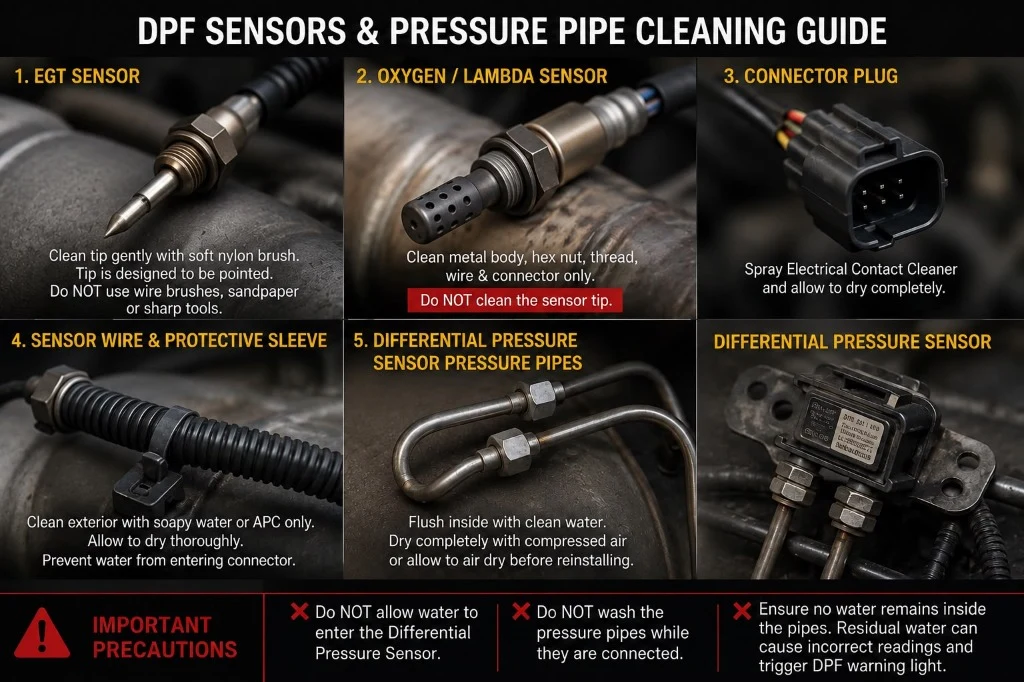
DPF Sensor & Pressure Pipe Cleaning Guidelines
Proper maintenance of DPF sensors and differential pressure pipes is essential to ensure accurate ECU readings, prevent false engine warning lights, and maintain 5-stage scientific DPF restoration efficiency.
1. Differential Pressure Pipes & Rubber Hoses
Differential pressure pipes measure the pressure differential before and after the DPF ceramic core. Over thousands of kilometers, carbon soot and moisture condense inside these metal pipes, causing severe crusting and false pressure differential readings.
- Inspection: Check both high-pressure (upstream) and low-pressure (downstream) metal pipes for cracks, severe corrosion, or soot clogging.
- Flushing Procedure: Disconnect the pressure hoses from the sensor. Flush metal pipes using approved electrical contact cleaner or mild carbon solvent. Use compressed air (at controlled low pressure) to blow out remaining carbon crust and solvent residual.
- Rubber Hose Check: Inspect connecting rubber hoses for heat degradation, hardening, or micro-cracks. Worn hoses will leak pressure and trigger false P2452/P2453 error codes.
2. Exhaust Gas Temperature (EGT) Sensors
EGT sensors measure temperature upfront and behind the DPF to ensure safe regeneration temperatures (550°C – 650°C). Heavy carbon coating on the sensor tip insulates the thermocouple element, causing delayed ECU temperature response.
- Safe Cleaning Technique: Gently clean the sensor probe tip using specialized electrical contact cleaner or alcohol-based solvent.
- PRECAUTION: DO NOT use abrasive wire brushes, sand paper, or harsh steel tools on sensor tips, as this will destroy the microscopic ceramic insulation and internal thermocouple element.
3. Oxygen (Lambda) & NOx Sensors
Upstream oxygen and NOx sensors calculate fuel-air ratio and emission levels before entering the DPF system.
- Carefully unclip the sensor wiring connector before unscrewing the hex body.
- Use dedicated sensor spray cleaner; never soak electrical connectors in liquid solvents.
4. Post-Cleaning Diagnostic Verification
After cleaning pressure pipes and sensors:
- Reinstall sensors using anti-seize high-temperature thread compound.
- Ensure differential pressure pipe fittings are torqued to OEM specification to prevent exhaust leaks.
- Connect an OBD-II diagnostic scanner to clear historic DPF fault codes and check live sensor parameter values (Differential Pressure reading should hover near 0 – 5 mbar at idle).